Andrew Chen on blogging profesionnally

Andrew Chen is one of my favorite tech/marketing bloggers. His blog is an endless source of knowledge for anyone who works in business today. He focuses on growth and digital marketing at startups but to be honest, some of his posts that felt futuristic 10 years ago are now the reality of any entrepreneur or intrapreneur. I found his writings in 2010 because I was desperately looking for a framework for my thesis on mobile marketing. His thoughts on mobile (as a personal device and a marketing tool) were much more developed than anything I found in the literature. I came back often to his writings, for his thoughts on emails, social, mobile, commerce, but also for his reflections on work in general.

He says he is blogging professionally. And I like that. Because when you read his lessons from 10 years of blogging, you realize that he's not blogging on top of his work – blogging is also his work. Here are the highlights from a recent article where he reflects on 10 years of blogging professionally and draws the most important lessons:

  • Titles are 80% of the work, but you write it as the very last thing. It has to be a compelling opinion or important learning
  • There’s always room for high-quality thoughts/opinions. Venn diagram of people w/ knowledge and those we can communicate is tiny
  • Writing is the most scalable professional networking activity – stay home, don’t go to events/conferences, and just put ideas down
  • Think of your writing on the same timescale as your career. Write on a multi-decade timeframe. This means, don’t just pub on Quora/Medium
  • Focus on writing freq over anything else. Schedule it. Don’t worry about building an immediate audience. Focus on the intrinsic.
  • To develop the habit, put a calendar reminder each Sunday for 2 hours. Forced myself to stare at a blank text box and put something down
  • Most of my writing comes from talking/reading deciding I strongly agree or disagree. These opinions become titles. Titles become essays.
  • People are often obsessed with needing to write original ideas. Forget it. You’re a journalist with a day job in the tech industry
  • An email subscriber is worth 100x twitter or LinkedIn followers or whatever other stuff is out there. An email = a real channel
  • I started writing while working at a VC. They asked, “Why give away ideas? That’s your edge.” Ironic that VCs blog/tweet all day now ;)
  • Publishing ideas, learnings, opinions, for years & years is a great way to give. And you’ll figure out how to capture value later
Read the full article here

AVC.COM

I truly started writing publicly every day because of this blog: avc.com. It is Fred Wilson's blog. He's a venture capitalist based in NYC. I don't remember how I discovered this blog but I quickly started to visit it every day. Just to skim through the posts and refresh my thoughts. Venture capital is not necessarily my cup of tea but I like to learn from the industry.

It also amazes me to watch the blogger develop his thoughts on topics over a long period of time. I started reading the blog in 2012-2013 when e-commerce platforms were growing fast, digital privacy was a new social issue, cryptocurrencies became hot, online advertising got harder (except for Google/Facebook), content creation and publishing was trying to find its way on the Internet, etc. Fred blogged about these topics multiples times over the past 5+ years, every time adding a little nugget of information. Each year he concludes with a year-end post, making predictions and reflecting on last year predictions.

This is a quote from today's post:

This stuff is fun for me but it is also a great mental exercise to go through. It forces me to reflect, think, and focus on what is/was most important. There is so much that blogging does for my brain. I am not sure how I would do my work without it. The daily routine of writing something for public consumption is a discipline that brings clarity in a confusing time. The bigger posts that come every now and then, and the year end ones, are particularly valuable to write.
— Fred Wilson (avc.com)

No matter what your occupation or job is. No matter what your routine is. Can you imagine how healthy that practice is? It takes time but I feel we can all squeeze 30 minutes a day to do it. I find it hard to develop the habit. I'm struggling a bit to write every day. And today I stripped down some design things here to focus on writing more. Because I'm certain the benefits it will have on my work, my craft, my thoughts, my life will outweigh the efforts.

Thank you Fred!

On being dismissive

The number one thing I try to avoid being is dismissive.

First, I think dismissing ideas is the most unproductive thing to do. Nothing good can come from a lengthy personal rant about how this idea, this person or this project is doomed to fail. It always says more about you, your personality, your insecurities than about what or who you're dismissing.

Second, I firmly believe the greatest ideas look stupid at first. I'm still young but I've already seen so many cycles. It goes like this. There's a new technology/trend/idea, people laugh about it, the thing gets better, people adopt it, people forget about it, people laugh at other people who don't joint them. Here's a quote from Benedict Evans I like:

In hindsight the things that worked look like good ideas and the ones that failed look stupid, but sadly it’s not that obvious at the time. Rather, this is how the process of invention and creation works. We try things - we try to create companies, products and ideas, and sometimes they work, and sometimes they change the world. And so, we see, in our world around half such attempts fail completely, and 5% or so go to the moon.
— Benedict Evans

Around me, it happens on a regular basis for two things: technology and projects.

1) The new things in technology often look like gadgets, toys or simply stupid features. Or worst, useless stuff for kids who have nothing to do! One of the best examples of that is Instagram. The photo-sharing app launches. It's a toy. It's an iPhone app to help you filter photos. It's for a helpless teenager who has nothing else to do than sharing what she had for breakfast that day. Fast-forward a few years, and the app is used by the teenager's grandmother to help her plan a trip to the Maldives. By using the geolocation feature and browsing through the Tourism board hashtag, she finds the most recent pictures of the resorts she wanted to stay in. She clicks on the resort's profile, find their website and even manages to find a coupon code for a direct booking in a 3-weeks old post. From a stupid photo app to a travel agent.

2) The new projects your friends tell you about always look like a bad use of their time or a hobby at best. It goes like this. Three friends start a surfing blog and spend 10h/week on it. You take a beer with another friend and spend 3h laughing about how it is a waste of time and how you'd never invest so much time doing that because a surfing blog is not a business! Your friends keep on doing it. They learn a bunch of different things while doing it: video editing, photo editing, a bit of design and web development, writing, running targeted advertising campaigns on social media, running affiliate programs, selling online (they just turned the blog into a shop!), etc. And while you invest 3h/week laughing at them, they invest 10h/week getting better at it. The blog never turns a profit. In fact, it's a money hole. But the three friends get together to open a surfing camp in Costa Rica after being approached for their marketing skills by an investor and surf aficionado. They connected the dots. I wrote about starting as a beginner and closing the gap between your vision and your skills. I think it is an essential thought to keep in mind when starting new projects.

Anyways, I try (and will try more) to avoid being dismissive of new technologies, projects, ideas, etc. I try to be optimistic. I think it's the best way to create a virtuous circle of new ideas around you. And if you depend on ideas in your work, try to being less dismissive, it simply works.

Be your own bank

I keep asking myself why cryptocurrencies are exciting. A lot of people talk about the price but the price discussion if a relatively new one. One that’s being heavily fuelled by media. Think about it: literally every week you can have a new viral article about how bitcoin lost or gained 25%. It’s the new darling of money channels and business publications. It’s a highly polarizing topic meaning endless engagement on social media. Its feeding trolls. But under the surface there’s a lot going on.

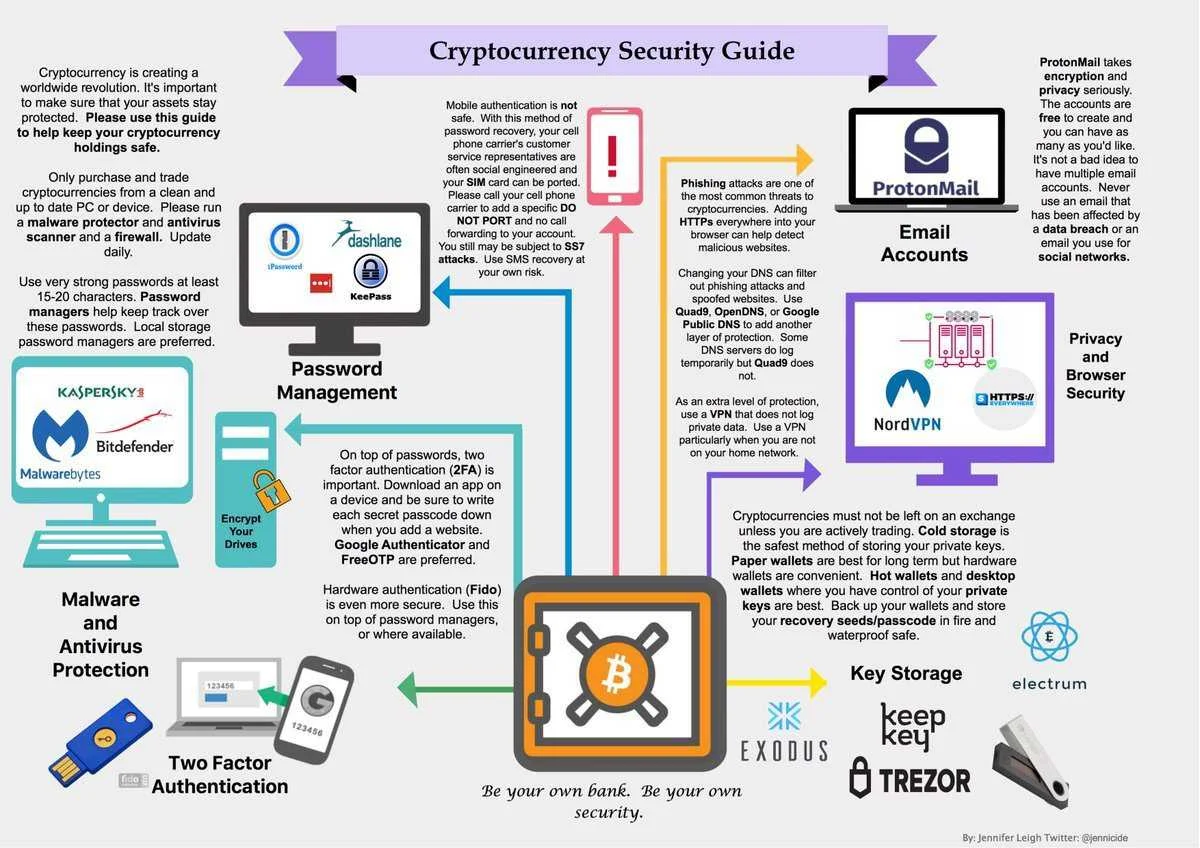
Take a look at this infographic. This is a mini-tutorial on how to be your own bank and your own security. This reminds me of a set of instructions on how to setup your own web server or your own FTP! You need to be extremely excited by the benefits of this technology to go out of your way, on a Sunday morning, and set up all this. Still tens of thousands of people around the world do it. So why are we excited about this? 

Credit: @jennicide  / via @coinsheets

I think there are strong cultural currents driving this:

Transparency. I want to know who take fees on my money. I want to know exactly how these fees are used. I want to know what software is support my transactions. I want to see the money moving. I want to understand why holding my money cost 12$/month

Security. I want to know it’s really hard to log into my account. I want to know a security breach won’t happen. I want to know my privacy doesn’t depend on a system administrator’s skills to update passwords monthly.

Control. I want to know I own, understand and control all the components that are needed to access my money. I want to be able to access it wherever, whenever I want. No matter which device I’m on or which country I’m in. I don’t want to ask any kind of permission to spend my money.

Literally, I just want to know what’s going on. For better or for worst.

Obviously, it's not efficient for everyone to do that. Not everyone builds and repair cars. Not everyone builds and repair computers. Not everyone grows and cook their own food. But people want me transparency, security and control.

A lot of these currents are strong emotional responses to a lot of events that have happened in the past 10 years. From the sub-prime crisis of 2008, the Wikileaks episodes, the latest US election (fake news!) and numerous data breaches (hello Equifax). I believe the key takeaway is that it’s healthy to ignore the waves (price discussion) but also healthy to consider the rising tide (cultural currents).

p.s. Sorry for the bad surfing analogy, I’m still in Sri Lanka catching waves!

Retail bankruptcies and the e-commerce obsession

Between 2010 and 2014, it seemed everyone was obsessed with e-Commerce. Managers were asked to prepare « e-BusinessPlans » and « Internet Commerce Strategies » (p.s. these are not real terms, just having a go at the whole thing). It was a special moment for e-Commerce, kind of a tipping point, were mobile and social were offering new ways of selling with unprecedented scale. e-Commerce had been growing for over 15 years prior to that, but it was beginning to make a real dent in traditional businesses. You could look at the trend and say with confidence that it would represent 10-20% of your business in a few years. 

Anyways, the hype was at its maximum. Expectations were high. You could not see the effects right now but you could feel the ground shaking. Optimistic marketers were evangelizing e-Commerce inside and outside of companies. Pessimist marketers were asking for more data. But if you only held your breath for a few years, e-Commerce didn't live to its expectations. It had its ups and its down. And over the years, traditional retailers had many opportunities to claim they won over e-commerce – that it was just a fad. 

But I saw this tweet this morning:

And it reminded me that I read this article 4 years ago. Jeff Jordan from A16Z wrote The Tipping Point (E-Commerce Version). Right at the beginning of the article, he states the following:

We’re in the midst of a profound structural shift from physical to digital retail. The drivers of this shift are simple:

Online retail has strong cost advantages over its offline counterparts and is rapidly taking share in many retail categories through better pricing, selection and, increasingly, service.

These offline players have high operational leverage and many cannot withstand declining top-line revenue growth for long.

The resulting bankruptcies of physical retailers remove competition for online players, further boosting their share gains.

And almost 4 years later, here's what the retail bankruptcies timeline look like in 2017:

RetailPostMortems_Timeline_Dec-20173.png

My main learning from this is that it's important to recognize where are we on the timeline when we make predictions or plans. Between 2010 and 2014, the e-commerce obsession was intense, almost unhealthy, creating a lot of tensions in companies. And we didn't know where we were on the timeline at all. And it's only many years later that we see the true effects of this movement. Even in 2017, it's still very early for online commerce in general.

The interesting part is that we moved to talking about other stuff before we could see the real impact of e-Commerce. We started talking about mobile, social, VR/AR, 3d printing, the blockchain, etc. It was not a novelty anymore, it was cool in powerpoint decks anymore. But it. And we kind of forgot about e-commerce. But it was making its way.

As the old saying goes, don't overestimate what happens in a year and don't underestimate what happens in 10 years.

Imitating consequences

I'm in Sri Lanka right now. So let's start with a beautiful photo from yesterday night. We stumbled upon a local bar and the team was celebrating its 1st year anniversary. Congrats to the owners and friends of The Doctor's House in Mirissa. Good vibes!

My thought of the day is about the dangers to imitating consequences. You imitate consequences when you look at a phenomenon from the results perspective. And you believe that the output is the work you should be aiming for. I have two simple stories to illustrate that. Two stories that happened today.

The first one was related to marketing. I was talking with a (new) friend of mine who wants to open a bed and breakfast in Sri Lanka. The country is filled with beautiful, charming small bed and breakfast that are promoting themselves fairly well. A lot of them are ran by Europeans (lots of Swedes actually) or American. They're advanced marketers too. They intuitively understand branding, customer experience and service, product distribution, product pricing, content creation and distribution, etc. It all seems natural, but they're tightly run businesses. So my friend, a little bit intimidated by the social media game of some hotels, opened the conversation with this: « Hey, how do I go about promoting my project? Should I hire Instagram influencers? ». Right there, he was simply imitating consequences. And it's normal for someone who doesn't work in this field. He's a finance guy, so I replied with « Well, if I want to be rich, should I just start making a lot of money? ». We laughed. The point is. you need to identify the cause before thinking about the consequence. Here, in the case of promoting a new project in Sri Lanka, I'd ask what are you selling, to who, where and why? And you'd go down to the bottom of the real questions and answer something like: we're selling weekly stays in our 4 bedroom-sustainable-house for young American adults interested in X via Air BNB because we fell in love with sustainable architecture after a trip in India. And then, it's pretty clear distributing your rooms on Airbnb (and maybe other booking sites) is the first priority in your business model. Otherwise, it just won't work. Hiring Instagram influencers? Maybe. But definitely not a priority.

The second one happened at yoga this morning. Our teacher read a beautiful section of her favourite yoga book. It went something like this: you don't practice yoga to be fit or flexible, your practice yoga to be comfortable with yourself and learn to listen to your body. The consequence might be that you end up fit and/or flexible, but it is simply an unimportant effect of an important process.

Namaste!

Trying out Pledge Music

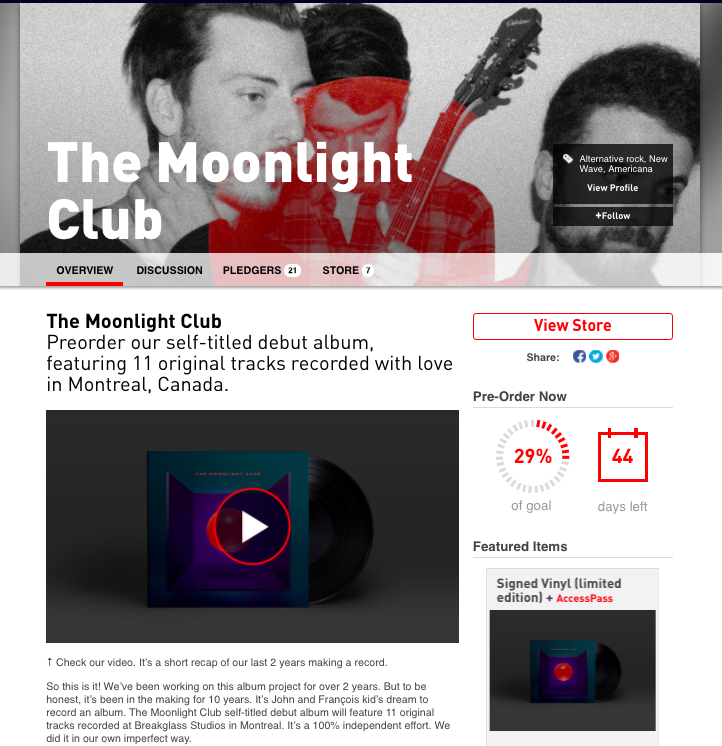
The Moonlight Club (my band, yay!) is currently running a crowdfunding/pre-ordering campaign on Pledge Music. Pledge Music is Kickstarter for music projects. I spent a lot of time in 2017 playing with Kickstarter so I was eager to try Pledge Music. This is what the page looks like:

I invite you to check out our campaign video. It's pretty cool. It's a short documentary featuring footage from the past two years. Here's a quick preview:

So it took us probably over 40 hours to put together the page. And we already had very good photo and video content that we produced in the past few months. There's a lot of writing, editing, tweaking, thinking about the products and the prices, thinking about shipping, thinking about updates, etc. It was also complicated as a Canadian band because everything is calculated in US dollars. The platform is great and the support was awesome. It makes a big difference that Pledge Music is specialized in music projects because some features are extremely well thought and only make sense for musicians. For example, they already calculate shipping weight for a lot of standard music items such as CDs, Vinyls... but even signed drumsticks! Plus, the community is great, you feel surrounded by a lot of legit projects.

Why am I telling you all of this? Because I believe the devil is in the details. And if I like going through all of that stuff to form an opinion on a service. Usually, when people recommend you do stuff online, like putting together a Kickstarter or a Pledge Music campaign, they have no idea what it actually implies. So I'm repeating myself, this is a 100hr+ job or fooling around if you need to create photo and video content, you want your thing to look decent, you need to promote the project and update the pledgers. Plus, think about shipping all those goods, it will take a full weekend for sure.

Selling stuff online. The first two words make it complicated, you need to sell, and you need to have stuff. The online part is easy ;-)


Dusting off my brain

I've been writing (almost) every day for the past 3 months and it feels like I've been dusting off my brain.

What I mean by that is that the first 15-30 days were really easy. I had a few things in mind I wanted to talk about. I had some thoughts about entrepreneurship, strategy, marketing, digital, creative, even money and cultural trends I needed to write down and share. It was becoming like dust on my brain. I don't think I wrote extremely good stuff but these thoughts were constantly on my mind so I had to let them go to make space for new ones.

The last few weeks were tougher. I had to be proactive and seek new ideas. I can't quote the same people every day, I can't re-use the same themes every day and I can't rant about the same things twice. Writing every day makes you realize how concentrated your thoughts are. How narrow you think. How your own world (my professional world in the case of this blog) is only composed of a few tangents that are parallel. It makes you aware of how small is the hole you use to peak through the wall that hides the rest of the world.

Dusting off my brain was fun. And useful. But I'm not a parrot and I don't want to rant all my life about the same things. I'm making a point of thinking (and consequently writing) about broader topics now.

See ya!

Dictation

I write documents and emails all the time. It is extremely time-consuming. Writing and editing documents is part of a process that helps you clarify your thoughts. But it's a really slow one. From what I've seen in my work experience in marketing, a lot of people spend much of their days sitting at their desk and agonizing on how they will write things down. Whether it's for a formal presentation, a long form memo, emails, etc.

Lawyers dictate. They also have dedicated staff to help them transcribe and re-organize speech in a coherent form. So I'm wondering why marketing never switched to dictation.

The funny thing is that marketers are extremely excited about the potential of voice recognition. Marketing strategies are transitioning away from a 'type-only' search model, fuelled by the proliferation of voice-enabled assistants such as Amazon's Echo, Google Home, Apple's Siri and Microsoft's Cortana.

But while they're all bullish on voice as a way to sell more products, I sit here wondering why they would not be bullish on voice as a voice to work more efficiently. I think it's because a lot of marketing work is visual. We ten do work on powerpoint slides and stuff like that. But it remains that even powerpoints slides are simply an illustration of a clear thought process (aren't they?). So I'm thinking dictation can be a way to work faster but also smarter.

In 2018, I will give it a try. I will try to dictate some documents using a speech to text software. The main advantage is obviously that you can speak faster than you write. The second advantage is that we tend to use simpler language when we speak – because we need to be understood. And I also believe there's a third advantage, which is you think differently when you use your voice – it's a new physical feedback channel to hear yourself thinking out loud.

The Sparklist

I'm not a very organized person. My processes are messy. My tools are rudimentary. And consequently, I miss deadlines and some of my thoughts get lost.

One trick I adopted a few years ago is the concept of a sparklist. I read about this very specific type of list on Quora or Twitter a few years ago. I can't even find the original source, but someone branded it.

A sparklist is just list (paper journal, Google Docs, Notes application). It must be easily accessible because you'll never know when you will use it. It for the « I've got to write this down » moments.

Your write anything and everything on a sparklist. There's no filter. There's no category. It can be keywords, sentences or short paragraphs.

I like it with no styling – only plain text. It makes it easier to avoid thinking about formatting or making it pretty.

Over the years, I've used the sparklist for many things but mostly:

Business/project ideas

I have a sparklist where I write stuff like « 3d print musical parts; phone cases; speakers » (this is an actual entry from 2013) or « Write a blog post about tuning of vocals in modern music » (another entry from 2015). So when I feel like revisiting my brain from a few months earlier, it's fun and I can laugh about some thoughts I had. 

Live notetaking

I attended SXSW 2017 and opened a sparklist just for that where I would write down quotes, speakers names, random restaurants. I didn't try to document my journey, I was just trying to catch up with all the information I gathered in these intense conferences.

Travel to-do

I open a sparklist when I travel as a « comeback to-do ». I just input a bunch of stuff I want to do when I get back. It's a thematic to-do. These are nice to do in paper journals.

Music writing

I use a sparklist for music writing. I take weird notes in my Iphone of quotes, book passages, songs ideas, words and phrases I like. I have a huge backlog of like 50+ items. When I pick up my guitar and play music. If I need some inspiration, I just read outloud all of that. Some are road names I liked in Vermont, some are quotes from bathroom graffiti, some are things someone said in a movie. Some are really old notes from 5 years + that haven't been used yet. Some are fresh. It's a backlog.

Try it! It really helps sparking new ideas.

Writing to taste life twice

When you do something everyday, like writing or going to the gym, the inevitable will happen: you'll fall out of your routine. It just happened to me with this blog. I had a few big 12hr+ work days and thought I would catch up on the daily blog. One day became three, and three became two weeks.

But the good thing about writing is that it's a great tool to time travel. I don't mind that I've missed these days, I can get them back by writing. It makes me think of this lovely quote by writer Anais Nin.

We write to taste life twice, in the moment and in retrospect.
— Anais Nin

Even if I didn't write on these days, I still had thoughts. I'm using my email outbox, my Twitter feed activity, my Facebook feed activity (likes, comments, etc.) and my calendar to go back in time and see what was happening in my mind on these days. So I wrote a list of about 15 things that happened in the past two weeks and I'll be writing about them in retrospect (while keeping up with new entries).

Because I write to taste life twice. This is not a hit or miss. I'm in control.

Writing the report is more important than reading it

It's Xmas early for me and I just received a Kindle Paperwhite as a gift. The first thing I did is try the annotation functionality. I'm not sure how it works internally so my first reflex was to send it to my email. Here's the first thing I highlighted:

(...) the author is forced to be more precise than he might be verbally. Hence their value stems from the discipline and the thinking the writer is forced to impose upon himself as he identifies and deals with trouble spots in his presentation. Reports are more a medium of self-discipline than a way to communicate information. Writing the report is important; reading it often is not.
— "High Output Management" by Andrew S. Grove

High Output Management was written in 1993 by Andrew Grove and is regarded as one of the best business books of all times. This passage on the value of writing to understand things sounds as refreshing as any « genius » quote I read everyday on business blogs. 

Writing the report is more important than reading it. It makes it easier to digest the fact that a lot of our creative work gets thrown out of the window. The report is not read. The analysis is not challenged. The creative is not used as is. The idea is rejected. The technology is not implemented. It's frustrating. But less frustrating if you do it for yourself, as an exercice of self-discipline.

Hedgehogs and foxes

This is the studio of my girlfriend's mother. It's a space in Knowlton, Quebec shared by 4-5 artists. I think most of them are retired from intense careers and they now enjoy pursuing different kinds of arts such as painting and sculpture. It's a beautiful space and a wonderful intiative.

14 Likes, 2 Comments - Francois Royer Mireault (@frankmireault) on Instagram: "Belle maman @doperron / Artist in residence 👩‍🎨 #knowlton"

Yesterday during dinner we discussed the importance of cultivating various interests growing up. We talked about how the next generation will probably have even more diverse careers that my generation and the generation before me. One thing that people ask me a lot these days is: so do you want to work in marketing, make music for a living, be an entrepreneur, run a restaurant, etc.? Well, my answer is all of the above. Why wouldn't I?

I've always like to combine many expertizes and make creative use of them. I don't believe in focus when it comes to living your life. It's just a bit harder to make it financially viable, butt it's not impossible. It's like having 3-4 friends instead of one, you have to plan better to see them all. But parties and discussions are richer and more interesting.

There are hedgehogs and foxes. I'm a fox. A lot of kids I meet who grow up with the Internet are foxes too.

A fox knows many things, but a hedgehog one important thing.

School and corporate environments are not modeled this way. You have to narrow down your options, year after year, until you become a specialized resource. I understand the necessity of mastering a specific field. But I don't think it should be done at the expense of having broad interests. And I think the biggest innovation technology could bring is break down these barriers and allow more kids to be able to live diverse lives. I truly hope it does.

Because I'm not waiting until I'm 60 to finally allow myself to write a book, sing a song or launch a business. I want to do it, and I want this to influence the rest of my work, for a long period of time. If you have time to go through Netflix series, you have time to do your retirement project now.

And this is my interpretation of the concept of compounded interests. The earlier you start saving time for the things that move your soul, the longer your work will benefit from them.


Which one would you leave behind?

I just started reading this series from the New York Times titled How to Be a C.E.O., From a Decade’s Worth of Them. The interviews are intimate and very straight to the point. It's great because Adam Bryant, the author, has interviewed 525 chief executives from different industries. So you don't get the same old quotes from Steve Jobs and Bill Gates. You get an unfiltered dose of wisdom from very smart people.

In this one with Arkadi Kuhlmann, chairman and president of ING Direct USA, they play a little game. The CEO turns over to the interviewer and and ask him this question:

There are five animals — a lion, a cow, a horse, a monkey and a rabbit. If you were asked to leave one behind, which one would you leave behind?

The interviewer answers saying he would leave the rabbit behind because it's not a lot of use to him. Arkadi Kuhlmann answers back:

“Isn’t a lot of use. ...” O.K., so a utilitarian approach. Well, I would leave the cow behind because I thought I could ride the horse; the monkey would be on my back; the little rabbit, I would just stick in my jacket. But the one thing that was going to hold me up is the cow, which is slow. And the lion can forage out there. So now you know what I picked and I know what you picked.

He then explains the game:

So the lion represents pride, the horse represents work, the cow represents family, the monkey represents friends, and the rabbit represents love. In a stress situation that you and I’d be working in, I know the one thing that you would sacrifice would be love, and your story would be something like this: that you could sacrifice love with people because you could make it up to them later.

It's supposed to be a Japanese personality test. I tried to find it online but the versions I found were not exactly the same. Anyways, here's the last bit of wisdom Arkadi shares about this test:

So if you have to get something done on the weekend, you’d work all weekend. When push came to shove, you’d sacrifice love. So that teaches me quite a bit about you. If you picked the horse, the conversation would end. I wouldn’t hire you because we’re never leaving work behind. Those types of examples teach me quite a bit about you.

Survivorship Bias

In his article Why Success Stories Are Just Propaganda, Martin Weigel describes survivorship bias like this:

Survivorship bias… flash-freezes your brain into a state of ignorance from which you believe success is more common than it truly is and therefore you leap to the conclusion that it also must be easier to obtain. You develop a completely inaccurate assessment of reality thanks to a prejudice that grants the tiny number of survivors the privilege of representing the much larger group to which they originally belonged.

Survivorship bias is true in the military, business, marketing, finance... etc.

In finance, survivorship bias is the tendency for failed companies to be excluded from performance studies because they no longer exist. It often causes the results of studies to skew higher because only companies which were successful enough to survive until the end of the period are included.
— Wikipedia

It is true for careers too.

Whether it be movie stars, or athletes, or musicians, or CEOs of multibillion-dollar corporations who dropped out of school, popular media often tells the story of the determined individual who pursues their dreams and beats the odds. There is much less focus on the many people that may be similarly skilled and determined but fail to ever find success because of factors beyond their control or other (seemingly) random events.
— Wikipedia

It's a concept I hear about more and more. Especially in marketing and business. I think people are getting more realistic about case study results, success stories and romanticized business adventures. I think it's a great filter to have in your toolbox – to ask yourself when you read something if the conclusions are not just this logical error called survivorship bias.

Why I Use Twitter

I just had an insight into why I use Twitter. And since a lot of people joke (and trade stocks) thinking about whether or not the service is still relevant in 2017, I thought I'd share it.

It took me 7 years to understand why I use Twitter because I had to go through different phases in my life, both professionally and personally.  I joined the service in 2010 and as a user, I've always been ambivalent about Twitter. I sometimes love it, I sometimes find it extremely useless.

There were some phases when I was focused internally (self/family/friends/stable job) and some phases where I was focused externally (new project/new school/new city/new job).

My Twitter usage is directly correlated with my openness to the world.

And there are times when I feel less open than others. Less curious, less sociable, less focused on growth and more focused on doing things I know. 

In the past year, I started using it again. I started a new business (two actually), launched a new music project, moved into a new co-working space and started writing again

I'm by myself a lot. I need inspiration. I need « company ». 

I need to hear chirping. 

If you've been working in a 200 person office every day for the last 5 years. You don't need Twitter. There's enough chirping. If you're a new student in a new city studying a new field. You might need twitter. You need to hear chirping.

Conclusion for me: Facebook is a never-ending marathon of low quality socializing with people you know. Twitter is a quick sprint during meaningful moments in your life when you need external input.

If you want to dig in a little bit, there are tons of awesome reads about Twitter. Users, employees, partners and investors are usually extremely passionate about the service. Speaking of which, if you're curious about all the hype the platform gets, I suggest you read What Twitter Can Be by Chriss Sacca. It's a very long read and a thoughtful piece written by an early investor and heavy user who wanted to see the platform succeed. If you're more into drama, the book Hatching Twitter written by Nick Bilton is pretty awesome. It's almost a thriller. 

Bonus: I had this song stuck in my head while writing:

Celebrating the 50th anniversary of Revolver with the digital release of the video for "Eleanor Rigby" - revisit the album now: http://smarturl.it/thebeatlesrevolver Released as a double A-side with the song "Yellow Submarine in August 1966, Eleanor Rigby marked a giant leap forward in the way that The Beatles thought about their art, following their exploration of new and more complex musical ideas such as "Day Tripper" and "Paperback Writer".

BOK, Philadelphia

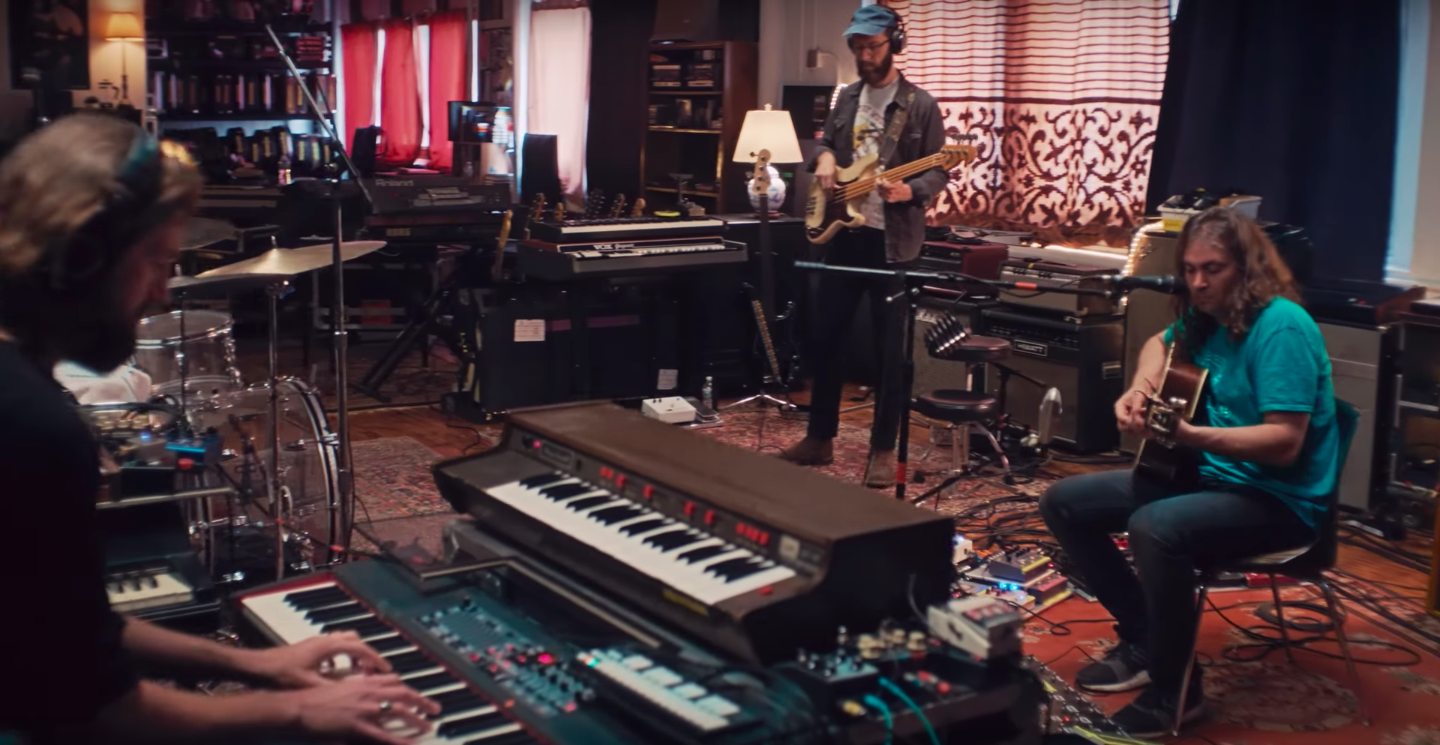
This is The War On Drugs playing music in their own rehearsal studio, BOK in Philadelphia. The studio was built in a historic vocational school that is now closed.

The city is building it into a « new, richly layered and constantly evolving center for creatives, small businesses, non-profits, small-batch manufacturers and beyond ».

This is what dreams are made of.  And I think Montreal is a few years from now from getting a place like this. Well, I want to be part of it. Sign The Moonlight Club as first tenants!

Here are photos from their Instagram feed:

443 Likes, 9 Comments - Building Bok (@buildingbok) on Instagram: "TFW it's 40 degrees outside but you're pretending like it's summer inside. (Photo by..."

453 Likes, 4 Comments - Building Bok (@buildingbok) on Instagram: "Summer, never end. #gladmidsommar"

92 Likes, 1 Comments - Building Bok (@buildingbok) on Instagram: "Flashback Friday? Just kidding we missed our throwback Thursday. This week has been nutty! One of..."

Kickstarter: Session - Skateboarding by crea-ture Studios

I played a lot skateboarding video games when I was younger. I remember ripping Playstation games and emulating them on my PC. I was obsessed with building themes and skateparks. Multiplayer was really fun too. You had to enter your friend's IP address and you'd land in the same game, skateboarding together.

That's why I just backed Session - Skateboarding simulation game by crea-ture Studios on @Kickstarter. Check it out!

crea-ture Studios is raising funds for Session - Skateboarding simulation game by crea-ture Studios on Kickstarter! Embrace skateboarding like never before with our unique dual stick controls and video creation tools. Skate, film, share and repeat!

Happiness VS Salary

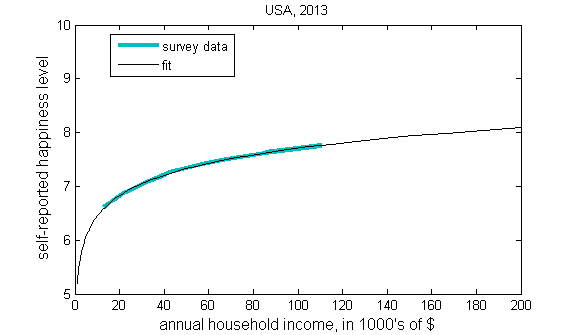
I forgot to write today! That is good. It means I was in the zone doing (hopefully) good work. I was just chatting with a friend on Facebook who told me he said no to the biggest offer of his life to start a business with friends. I instantly replied with this graph. I love it.

Source (it's an interesting article from Forbes)

Source (it's an interesting article from Forbes)

If you read this correctly, it basically says that you'll need much more than a big salary if you want to go up that happiness axis. It means that there are diminishing returns on your salary. The extra buck won't give you the same thing then that last extra buck. Yep, look at that curve, it gets pretty flat. This is a logarithm – the inverse operation to exponentiation. OK, enough maths.

We tend to appreciate things in proportion. The first years you lived seemed to last longer than your last one. Your first night out was probably more exciting than your last one. Your first raise was probably a more memorable event than your last one. 

I don't love graphs. But I love this graph.