Building Blocks Of Your Business Model

Nobody really likes to write a business plan. But I think most people can sketch a business model. Entrepreneurs usually have a bias for risk and action and writing a business plan is sometimes a burden. From my experience, I believe three big obstacles are that 1) it has to be written in full sentences in a word document 2) it requires planning too long in the future 3) theory, models, graphs are paralyzing.

As a strategist, I've used tons of different models to work out different kinds of strategies in the business/marketing fields – corporate, sponsorships, branding, communication, new product launch, e-Commerce, content marketing, social media. Then there's jobs to be done,  business model canvasesdisruptive business modelsindustry forcesblue oceans, etc. It's easy to get lost.

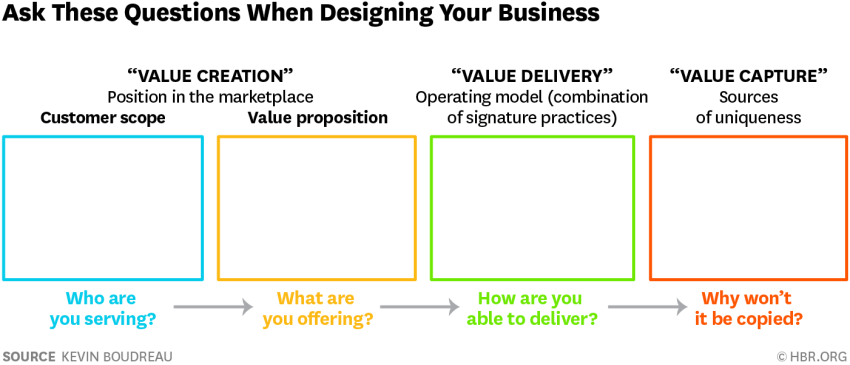
So when I stumbled upon this model via HBR, I was instantly hooked. It asks you to sketch your business model, not to write a whole business plan. It is the most basic questions that every successful business must answer. It's the building blocks of your business model.

Entrepreneurs who design their business around these questions will have a leg up when it comes to crafting strategy. The challenge of strategy is to develop an integrated view of the workings of your business and how it creates and captures value within its operating environment.
— Kevin J. Boudreau

It's a model, not a plan. And entrepreneurs have very good instincts about how their « engine » will work. So less writing/planning, and more sketching. And the model if really easy to adapt to the different kinds of business/marketing startegies I've mentionned before.

Emojis as design elements

I woke up to this tweet and it made me laugh:

I laughed again when Google's CEO, Sundar Pichai, replied back with this:

Emojis are a universal language. Everyone uses them. There's no learning curve to using emojis. They are an important part of private conversations by mobile messaging, text and email. They're a « serious » matter to Google's CEO. 

People are attached to them and will voice their concern publicly when emojis are removed/added or re-designed. They're a reflection of our culture and other cultures. They're part of our language. 

The point I want to make today is that I believe using emojis as design elements have propelled us in a new era of the web.

I believe emojis have:

  1. lowered the barriers for content creation online
  2. lowered the importance of media such as photos/videos in web design
  3. changed basic design/UX principles
  4. improved the clarity of communication for everyone

Emojis are a rising tide that lifts all boats. Let me oversimplify things:

  • 1989: the web is basically The Matrix = nobody knows how to use it
  • 1994: everything is HTML = javascript, coders only
  • 1996: everything is flash = designers only
  • 1998: everything is CSS = designers + coders only
  • 2007: mobile + social = content creation is a bit easier, yay!
  • 2010: responsive web design = it's complicated again, designers + coders only
  • 2014: video/photo era = everyone with a camera can produce viral videos
  • 2017: mobile + emojis = everyone can make punchy memes, tweets and newsletters

Basically, what I'm trying to illustrate is that in 2017, you can communicate creatively and efficiently with text, photos, and emojis.

You don't need web designers, coders, videographers, photographs to help you communication emotion online. You have emojis.

Emojis bridge the gap between text content and design by adding emotion to text. If you're a webmaster, a social media manager, a newsletter writer or any kind of content creator online, you can do a lot with emojis.

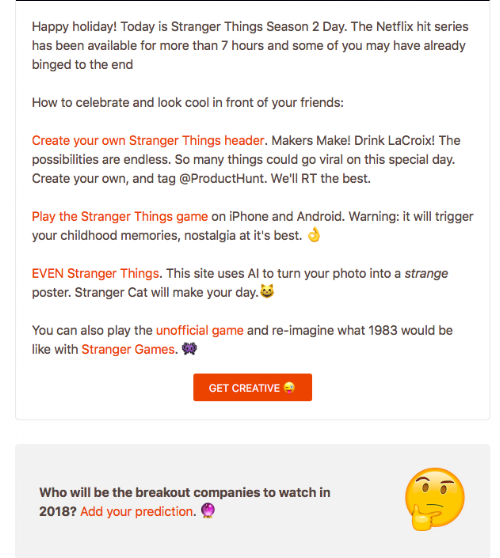
Here's a good example from Product Hunt's newsletter. It's all about good copy and a good emoji game. How much time do you think they spent « designing » this newsletter?

Capture d’écran 2017-10-29 à 11.46.02.png

They didn't have 4 rounds of correction with a full design team. The newsletter curator probably wrote it in a single setting. And still, it competes well with any well-designed newsletter in my inbox. It's good content with a lot of personalities.

Using emojis as design elements to replace photos, custom icons and calls-to-action is a smart move!

The Concept Of An Artist

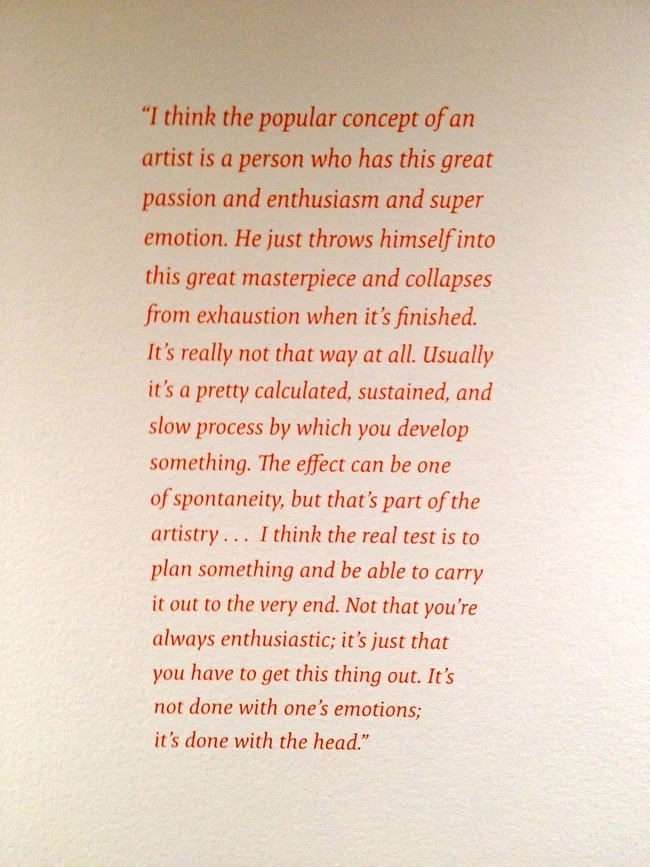
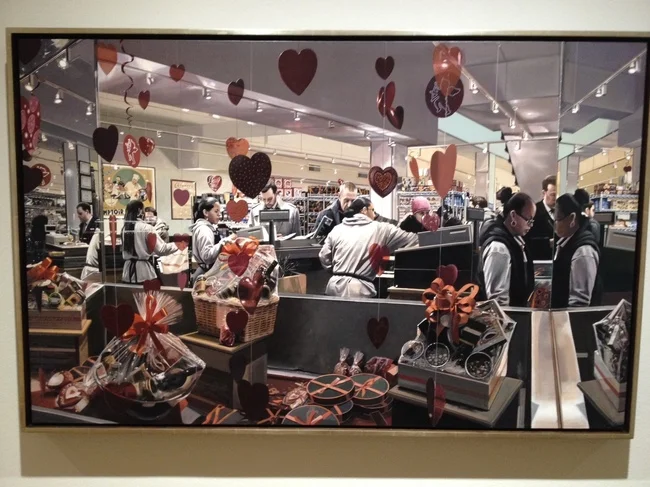
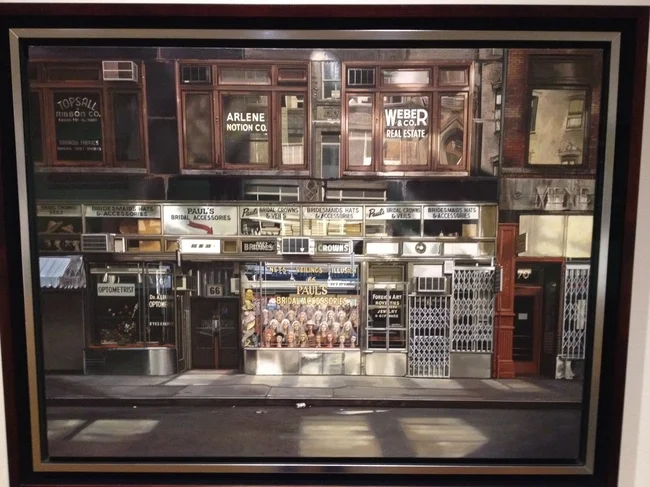
It's Saturday and I felt like re-reading this. The following quote was taken from an exhibit featuring painter Richard Estes at the Portland Museum of Art in Maine in 2014.

I like it because it shows another side of being an artist. It's a side that is less flamboyant to the public and that is less talked about.  Hard work, good old hard work.

calgpt1mgdodkw_small.jpg

I've worked many years in advertising and I think the quote applies well to a creative process in general. You do have enthusiasm, passion, and emotion. But the great creatives I've worked with all had a process, a calculated, sustained one. Otherwise, they'd have been one hit wonders.

Here are a few photos I took from the exhibit:

ucqz7sdjz8svna_small.jpg
km0t3smlpyannq_small.jpg
vrq7wkzjtseiyg_small.jpg

And here's a video from the Portland Museum of Art:

You Say You Want A Revolution (the 6th technological revolution)

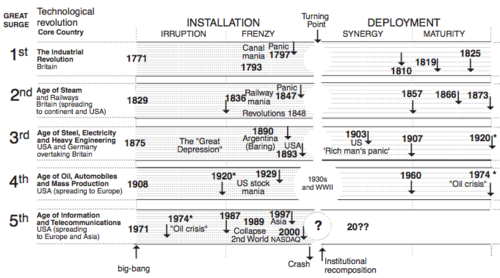
Technological revolutions usually happen in two phases: the installation phase and the deployment phase. Here’s a chart showing the four previous technological revolutions and a fraction of the current one (Chris Dixon / Carlota Perez).

url.png

We can definitely argue we are in the mature part of the 5th phase's deployment. I think it's impressive how fast we shifted from creating-installing stuff on the web to diffusing-optimizing-curating.

  • You don't need to create ecosystems from scratch anymore.
    You publish content on Social Networks.
  • You don't need to build websites.
    You have self-serve platforms like Shopify/Squarespace.
  • You don't need to build apps.
    You find one on Product Hunt or IFTTT.
  • You don't need to build media channels.
    You buy 80% yourself via Google/Facebook.
  • You don't need PR firms.
    You hire influencers via online recruiting platforms.
  • You don't need email marketing suppliers.
    You craft your own emails on Mailchimp.

Obviously, I'm just exaggerating perceptions here. And to be honest, this maturity makes certain areas exciting and others challenging. For example, I'm having a lot of fun marketing some of my personal projects (blog, music band, restaurant) because this infrastructure makes is extremely easy to do stuff online. As an artist, entrepreneur or hobbyist you have access to almost all the big companies tools. There's no friction between ideas and execution.

Conversely, if you're working in a web/digital agency trying to pitch by ambitious/disruptive projects you might get a lot of pushback from your clients because you're competing with an already mature infrastructure. You need to sell more content and fewer containers. Same thing in media – the opportunity cost of working with a media agency VS directly using Google/Facebook directly is huge. You can't sell the containers anymore (oh, by the way, Ben Thomson has an incredible post about that), you need to sell data or analytical skills or whatever-in-house tool you have.

To go back to the graph up there, the synergy phase was when you got paid 310 000$ to create a website you can now do with Squarespace in one weekend. Not in the maturity phase, we think twice about that because the opportunity cost is enormous. Even e-commerce is now a commodity for half of the retailers. I'm not saying executing a profitable e-commerce plan is easy; just saying there are millions of e-commerce stores online, thanks for Shopify & co. 

You could also argue that we're entering the 6th phase with blockchains and cryptocurrencies. The decentralized applications phase. And there will be a ton of building to do That'd be consistent with the theory that says each revolution begins with a financial bubble that fuels rapid installation of the new technology. Was mobile a revolution on its own with its own creation-installation-deployment phases? Are decentralized apps just a chunk of the 5th phase? Will we have to learn how to create apps on the Ethereum network to run profitable ad agencies Irrelevant. We'd be in the big bang - irruption - frenzy - crash cycle right now. The deployment phase is coming and I'm quite certain a lot of tech, marketing and media suppliers will find plenty of opportunities building decentralized apps. 

>>> The cool thing is that now you can re-write the last paragraph using another new technology such as Virtual Reality or Voice Recognition or Artifical Intelligence.

If you haven't noticed, I'm all over the place today. I'm just trying to make some sense of this because it's pretty clear the next decade won't be spent building mobile apps and websites. So what is it going to be? The point is that those who missed the installation phase of the web are lucky because there's phase coming. And it's not taken place in only one city. Because the 5th phase enabled everyone to participate in the subsequent technological revolutions.

You say you want a revolution.
Well, you know.
We all want to change the world.
Meaningful work, not money.

I was just skimming through an article titled Examining Employee Burnout: Cost, Cause, and Culture and felt really bad for my generation. Work – we haven't figured this one out yet, haven't we? I posted the following in 2015 on my old blog and felt like posting it again today. It is as relevant as it was then.

Each year, Mary Meeker from KPCB releases a monster presentation deck full of interesting stats, trends, and predictions regarding the Internet.

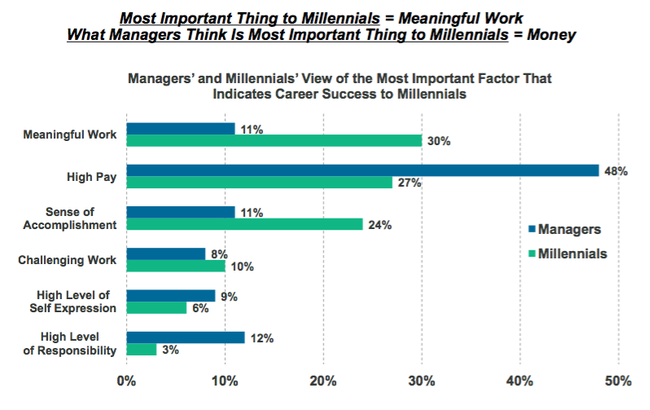
Out of the 195 slides of content, between stats about mobile usage, video consumption, Snapchat, and drones, this one struck me the most.

Millennials want more meaningful work, not more money.

But managers think they want more money, and that’s what they’re offering.

j2k6hgqvsmf6lq_small.png

Like a friend who buys you a gift when all you need is a talk over a coffee.

Gold for Millennials

What I like about Bitcoin, the blockchain and cryptocurrencies, is that it sends me to new parts of the Internet I didn't know before. One area if finances and legal blogs. In my post Opening up the financial system, I referred to what I thought were 4 great articles on the topic. I read another one today that I'd consider adding to the list. 

The article is The Bitcoin Boom: Asset, Currency, Commodity or Collectible? by Aswath Damodaran, Professor of Finance at the Stern School of Business at NYU. It's not an optimistic view. It is a quite neutral view of Bitcoin for what it really is. In fact, the point of the article is trying to define what it is

What I like is that the author goes in-depth and makes the case for Bitcoin as a currency.

The first step towards a serious debate on bitcoin then has to be deciding whether it is an asset, a currency, a commodity or collectible. Bitcoin is not an asset, since it does not generate cash flows standing alone for those who hold it (until you sell it). It is not a commodity, because it is not raw material that can be used in the production of something useful.

He then proposes three possible paths that he sees for Bitcoin as a currency, from best case to worst case. Here's number 2:

2. Gold for Millennials: In this scenario, Bitcoin becomes a haven for those who do not trust central banks, governments and fiat currencies. In short, it takes on the role that gold has, historically, for those who have lost trust in or fear centralized authority.

Gold for Millenials. I like that.

Read The Bitcoin Boom: Asset, Currency, Commodity or Collectible?

The Public Radio

I tweeted this photo this weekend:

Followed by this one:

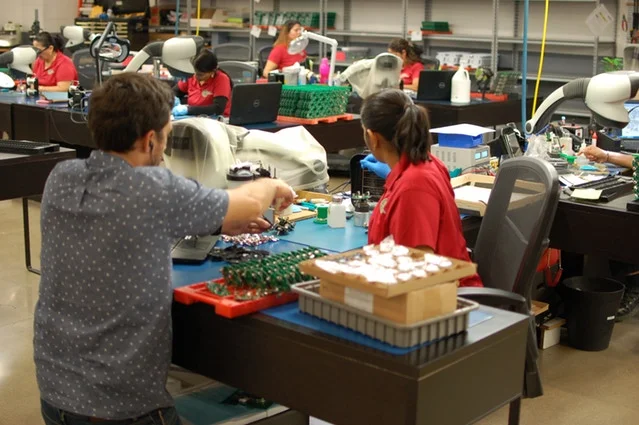
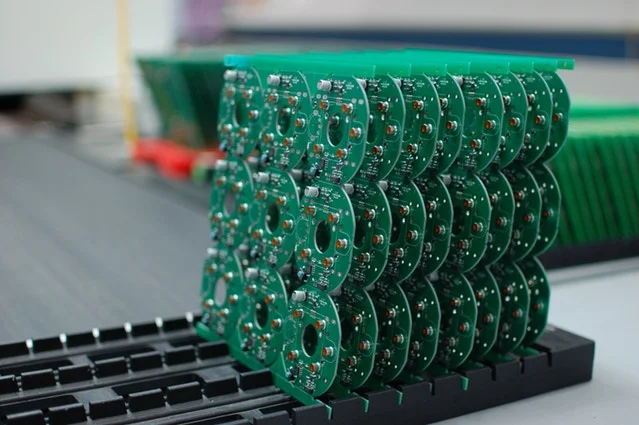
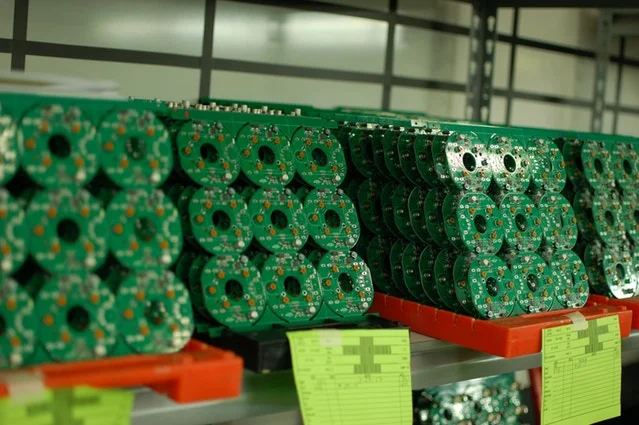
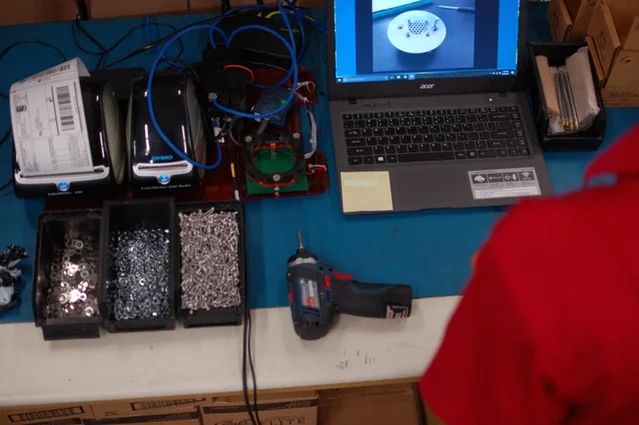
Long story short, I participated in a Kickstarter project a few months ago for a product called The Public Radio. The Public Radio is a single station FM radio housed in a mason jar. It's a totally uncomplicated device - just an antenna and a volume knob - and ships pre-tuned to the listener's station of choice. I bought one for my girlfriend and set it to 95.1 (Radio Canada). It's a very cool product, I suggest you check it out. I can add that the audio quality is impressive.

I'm a « digital » guy but I learned a few « analog » things about manufacturing following these guys in their adventure. Here are a couple of photos from their Kickstarter page:

I'm telling you all this because there's a nice little story about how I discovered this Kickstarter project. As a strategist/curious marketer, I had been following the now-defunct New-York based strategy agency Undercurrent for a few years. Their strategists have always been very vocal on Twitter, Medium, etc. and their essays helped me a lot on past mandates.

One of these strategists was Spencer Wright, who co-lead The Public Radio project. He's a self-described planning/manufacturing guy-at-large who runs a great newsletter called The Prepared.

I wrote to Spencer a few years ago asking him why/how/when was he writing his blog and sending his newsletter. His answer helped me get started in my own writing process. I started a blog at that time, which morphed into this one a few years later.

Anyways, cheers to The Public Radio. And I thank the Internet for all these great discoveries. Stay curious!

Opening up the financial system

I started the day at Café Olympico with my friends François (we play music together) and Francis (we work together) and the conversation eventually shifted to cryptocurrencies, as they usually do when I've had too much coffee.

There's so much material to read regarding the (recent/upcoming, depends on you see things) opening of our financial system. See how I avoided the words 'Bitcoin' and 'Cryptocurrencies', this post is about that, exactly.

If you have some time and are ready to dive in, I suggest the following 3 article. The authors are 3 thought leaders in the space and they offer different perspectives.

1. A Letter to Jamie Dimon

Cryptocurrencies are a new asset class that enable decentralized applications. Don’t have an opinion on decentralized applications? Then you can’t possibly have one on cryptocurrencies yet, so read on.
— Adam Ludwin
Firms have played an important role in society for decades for these reasons. Despite their prominence, most people dislike them. Bitcoin is the first example of an organizational structure that has the beneficial characteristics of the firm combined with some new characteristics
— Nick Tomaino
Our mission is to create an open financial system for the world. We believe that open protocols for money will create more innovation, economic freedom, and equality of opportunity in the world, just like the internet did for publishing information.
— Brian Armstrong

Edit: I'm adding this in-depth article by Preston Byrne as a balance of the sheer optimism displayed in these 3 articles. A good strategist must consider both sides of a story.

4. The Bear Case for Crypto

Cutting to the chase, the reason the ICO and Bitcoin markets are booming the way they are is because regulators in the major jurisdictions for transacting financial business have, for four or five years, more or less entirely abdicated responsibility for enforcing the laws if the word “blockchain” is involved.
— Preston Byrne

Medium.com Is The Message

I've writing about taking care my brain before. And I believe a big part of that is reading quality, in-depth content. For the past 5 years, Medium.com has been on a mission to provide just that to its readers. They've been struggling with finding how to do that properly and profitably and they've received some bad press in the past for not holding their promises to writers, readers and advertisers.

They're trying to break the Internet free of its current (broken) media landscape where you read crap on Facebook, click on crappy links and end of on crappy websites that run crappy sponsored content from anyone. Nobody said doing that would be easy. But words still matter, as Ev Williams says.

And what we mean by “words matter.” It’s not just that the written word still has influence and impact, which it obviously does. It’s that the information we consume matters as much as the food we put in our bodies. It affects our thinking, our behavior, how we understand our place in the world. And how we understand others.
— Ev Williams

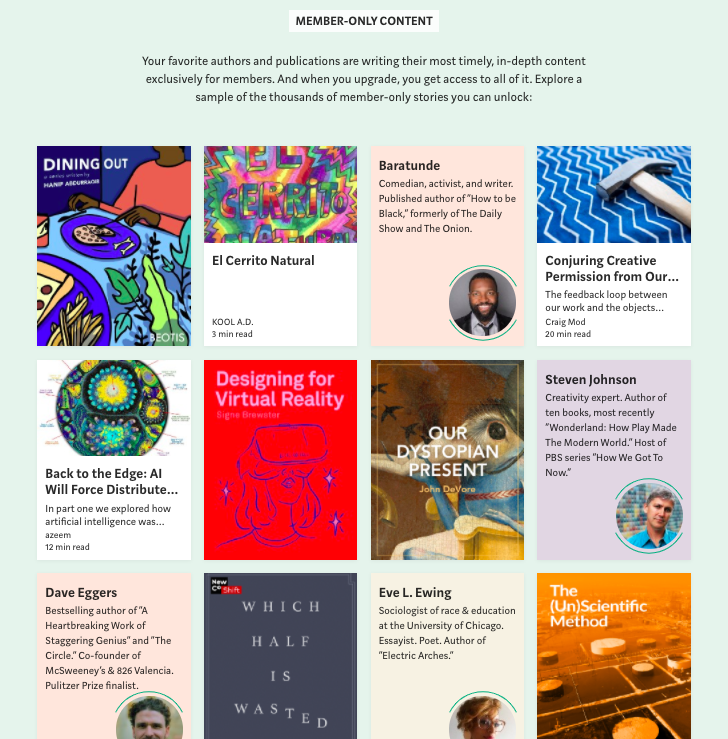
Anyways, I'm happy I just became a member of Medium.com for 5$/month. It adds up to my Spotify bill (10$/month). As a musician and wannabe writer, I think it's the minimum I can do! The member's section on Medium.com looks great – and much more like a well-curated library than a low-quality newspaper. I'm excited about it.

Medium membership.png

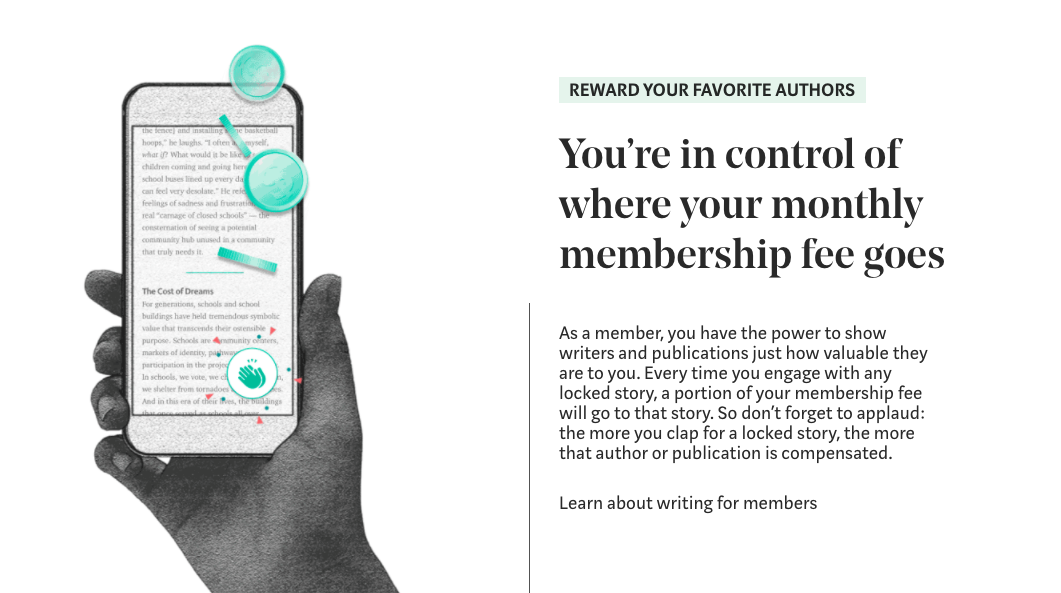
I like how Medium.com is experimenting with new features such as « claps » instead of likes. It allows you to clap for a certain amount of time as a way to react positively to stories. And one thing members get is the ability to reward author personally with claps. I think that's great.

Capture d’écran 2017-10-22 à 19.52.06.png

Amazon's HQ & the bright side of Montréal

Very rarely we look at the city we live in from a tourist or investor's point of view. Through my work at lg2 in the past years, I was lucky to contribute to Tourisme Montréal's efforts to promote the city as a vibrant, open, smart and creative environment. It was a shock to realize tourists sometimes have a much better opinion of Montréal than we have. It's through their eyes that I became aware of Montréal's brightest sides.

This week was the final week to submit a proposal for a chance to host the future headquarters of Amazon, HQ2. Amazon could invest over $5 billion in the construction of its new headquarters and hire up to 50,000 new employees.

Some proposals ended up online (Toronto) and it's extremely interesting to see how the cities present themselves. It's a goldmine of information but also a good proxy to understand how the cities view themselves.

Montréal's proposal not yet to be found online but it was definitely submitted!

(from the press release)

Hubert Bolduc, President and CEO of Montréal International, personally delivered Greater Montréal's bid for Amazon's second North American headquarters yesterday in Seattle. Tasked by the Communauté métropolitaine de Montréal (CMM) and supported by the Government of Québec, Montréal International presented a distinct and ambitious proposal to the global e-commerce giant. Amazon could invest over $5 billion in the construction of its new headquarters and hire up to 50,000 new employees. Here are a few highlights in the Montréal bid:
  • A deep and growing pool of relevant talent fueled by a world-class education system (Montréal accounts for the highest number of students in Canada (320,000), spread within 11 university institutions and more than 60 colleges);
  • Canada's world class technology hub (Montréal has the highest concentration of tech sector jobs in any Canadian city and reached the international Top 5 of leading cities in video games, visual effects, artificial intelligence and aerospace);
  • Economic and political stability, including an open and efficient immigration system (As a collaboration between the Government of Quebec and the Government of Canada, the Québec component of Canada's Global Skills Strategy helps innovative companies get workers faster by offering a two-week processing time for work permit);
  • A 20% to 25% cost advantage compared to similar cities (thanks to affordable wages, attractive corporate effective tax rate, and low, stable energy costs);
  • A high purchasing power and exceptional quality of life (Montréal offers young professionals housing that costs 25% less than in Toronto and 86% less than in Boston).

I hope the proposal will be available online soon and that Montrealers will read it. It's a great opportunity to learn more about our own city through the eye of investors.

Whether you like the idea of having Amazon's new HQ here, I think it's a must-read. We often hear and read about Montréal's dark sides in our own media and I'm happy to discover the bright side of Montréal in this document.

extra: this is Jeff Bezos, smashing a champagne bottle 300 feet in the air. It's Friday for everyone after all.

A Deeper Understanding of Platforms

a16z is a famous venture capital firm founded in 2009 by Marc Andreessen and Ben Horowitz. Their podcast discusses tech, culture, current and future trends. I enjoy it because the discussions are usually aimed at understanding a phenomenon and not necessarily praising or condemning it

In this episode, Tim O’Reilly (who popularized the terms open source and Web 2.0.) and Benedict Evans discuss how we make sense of the most recent wave of new technologies —- platforms such as Uber, Lyft, Airbnb, Amazon, Apple, Facebook, etc. — and how we think about the capabilities they might have that we haven’t yet even considered.

Right at the beginning, they discuss a huge misconception about modern technology platforms and where other businesses usually get them wrong. Tim explains that even if the tip of the iceberg (the thing you see or use) might be a website or an app, that particular piece of technology is usually a tiny fraction of the underlying business model. The defensive strategy of competitors is usually to copy and try to imitate the tip of the iceberg (app or website) but it's pointless.

For example, taxi companies. They thought it’s the app. If we have the app, it will work! But the app is only a tiny part of the business model. But the fact that Lyft can deliver 3-min pickup times is because of all these part-time drivers showing up in their own cars that supply automatically rises when there’s more demand.

It's a good reminder that if you want to copy what the new wave of tech is doing you need a deeper understanding of all the economic parts of their model and what makes it so magical.

Just like « selling online » usually involves less online implications and much more physical implications (packaging, shipping boxes, returns, warehouses, photo studio, etc.) than people estimate at first.

« Oh but I think the strategy should be that we make an app like Airbnb and then... »

Then not that much, most probably ;-)

p.s. Yes, the post title is a reference to The War On Drug's new album, you should listen to it.

Building on fundamentals

When we try to learn something new by ourselves, we want to get good at it really quickly.

When I was learning to play the guitar, I’d rather play an entire song badly and strum one chord perfectly, or even worse, learn how the chords were constructed. Later, when I started messing around with design projects, I was more interested in editing an existing picture than to build a new one, pixel by pixel.

Same goes for all kind of manual work, writing, programming, making coffee. We want to know how to do it and not necessarily the why of every step.

Building on fundamentals

In this video, Bill Evans (famous American jazz pianist and composer), Bill shares on learning step by step, building on fundamentals instead of vaguely imitating wholes. He talks about breaking things into pieces and working to understand in-depth each part.

It’s better to do something simple that is real. It’s something you can build on because you know what you’re doing. Whereas, if you try to approximate something very advanced and don’t know what you’re doing, you can’t build on it.

I’ll try to remember that.

--

p.s. this is a re-post from an archived blog I experimented with a few years ago – as I'm trying to write every day on this one, I like to look back at these archives and think it was just me trying to do what I do now, 3 years too early ;-)

Do you have something to say?

I'm still going down the McKinsey rabbit hole today and I'm listening to this podcast with Bill Matassoni, who was a McKinsey senior partner for almost 20 years, focused on building McKinsey’s reputation and protecting its brand, which included publishing the McKinsey Quarterly. It contains a few insights on how the firm built its reputation by avoiding advertising and embracing PR in (for the time) innovative ways.

There's a great passage where Bill talks about the time he was asked to draft a policy regarding public and private speeches. McKinsey was obviously highly solicited to give them and it was time to draw a line: which one would they say yes and no to.

So he drafts a policy and shows is to Marvin Bower who comments that the policy is fine but that it's missing something at the top:

The first thing to consider is probably whether you have something to say to these people.
— Marvin Bower

This quote is as true today as it was 20 years ago. Conferences, workshops, and industry events are multiplying and much like content on the Internet, there's more supply than demand.

I see professionals accepting invitations to speak, turning around to friends/colleagues to brainstorm on what they should say, outsource the content development to employees/interns/students and get help from other people to write the speech.

Did you really have something to say to these people?

It's OK to say no if you don't have anything to say.

p.s. I totally understand the irony of this reflection on a personal blog ;-)

Niche knowledge as-a-service

We often talk about direct commerce in retail and how niche players are « circumventing the middlemen and are shipping directly to consumers ». It's happening in the media too and I'm happy to see it's getting easier for people to buy/consume exactly the information they want versus buying/consuming mass media.

Niche knowledge hubs take different forms but I think the most interesting one is the one-(wo)man show. People develop niche knowledge hubs online and build distribution channels, business models, and communities around them. It's niche knowledge as-a-service.

In technology, Ben Thompson is quite famous for running Stratechery and growing a healthy subscriber base. He explains how he built his community and business in this short video. It's really good, I suggest you watch it.

Because the Internet enables niche in a massively powerful way where you can focus and be really good at one thing and because you’re not constrained to a geographic area you can reach the world.
— Ben Thomson

The interesting part here is that as a reader, you can unbundle your media consumption but subscribing to 4-5 niche knowledge hubs such as Stratechery. Instead of receiving the generic analyses of big publications, you receive a very personal point of view, daily/weekly, on a very specific theme. It feels much more interesting than reading news and allows you to diversify your consumption instead of betting it all on one big publication.

For example, I get my cryptocurrency insights via CoinSheets, my strategy insights via Ben Thomson, my tech insights via Ben Evans, my manufacturing/problem-solving insights my Spencer Wright, my music insights by Bob Lefsetz and my daily philosophy by Maria Popova.

That way I can avoid mass media and moreover, I feel like I'm feeding off the top minds in their respective fields. I'd love to receive well-curated insights from other industries/themes but I'm still slowly building my list. And as your career/life evolved you can easily switch on/off certain feeds.

Yes, RSS feeds have been around for a while, but access to new publishing tools and platforms (blogs, newsletters, twitter feeds, Patreon, etc.) makes it easy for an individual to compete with big publishers in terms of content quality and ease-of-use.

The 10,000 years view on money

I've been interested in cryptocurrencies since 2013. In 2014 I did an intro presentation to the whole agency at lg2 but it was so new at that time, I mostly received puzzled looks. Still, it refined my thinking on the space and it got me into a few weird corridor discussions. A few years later, I'm still trying to think clearly about cryptocurrencies. Why are we so excited bullish about this? Why does it feel like an 'Internet' moment again?

I think the price discussion (goes up 500$ = article, goes down 200$ = article) is quite toxic these days and even if I like to cheer once in a while, I'm mostly looking for interesting pieces of reflexions to better understand the true value of this new technology.

This tweet and graph by Twitter user @woonomic caught my attention.

It does two things: 1) it put things in perspective regarding the price, speculation, ICOs and whether or not Bitcoin/Ethereum are truly the longterm solutions – none of this matter on the 10k years scale 2) it reinforces the fact that cryptocurrencies can be the money/asset layer of the Internet if you give them enough time to grow – and it makes a lot of sense when you think of it in these terms: gold --> fiat --> crypto

Gut feeling versus analyses

I often struggle with two sides of myself: my gut feeling and my analytical mind. I have a strong entrepreneurial-creative side and an almost paralyzing analytical brain. Sometimes I want to write songs, sometimes I want to look at graphs. It makes it tricky when doing strategy work because these two don't talk the same language.

On one side, people are begging for data-driven insights (whatever that means, seriously) and on the other, others are begging for good common-sense/gut feeling thoughts. This is the never-ending business conversation.

I was down an Internet rabbit hole this weekend looking up documentaries on big consultancies (yes, I was looking for crazy stories from the 80's/90's) and I stumbled upon this interview of Kevin P. Coyne, former strategy co-lead at McKinsey. I didn't know him and if you want to fall into the same rabbit hole, look up his work on HBR.

In this interview, he addresses different topics such as ethics and offers a great framework for the famous 'gut feeling versus analyses' dilemma. It starts at around 25m.

The framework is deceptively simple but quite effective. Break the problem into pieces and apply gut feeling to the pieces, not the whole thing. To paraphrase him:

I try to think from an analytical standpoint what the nature of that problem is and how it breaks down into pieces that would have to work together to form a solution and I then apply the gut feeling (or experience) to the pieces, not just the original problem.
— Kevin P. Coyne

Voilà. I'll probably write another post trying to highlight a specific case of using this framework. But I think it highlights one thing: never oversimplify a problem and try to solve it with your gut OR data. Use both and avoid falling in love with your own thinking.

Be safe on the 'data-driven insights' highway ;-)


750words.com and the shared experience of writing privately

It's Friday and even if I took many notes on what I should be writing today, I feel lazy. So I'm taking a few minutes to write about the website http://750words.com. I discovered this website a few years ago and it helped me think clearly during a few difficult months.

To me, http://750words.com is a great example of what the Internet is good at. It's a not a complicated web-app or a well-designed software by a cool Silicon Valley company. It's a personal project that turned into something useful for thousands of people and turned into a business. It's a bit rough around the edges and feels scrappy. Not a lot of people know about it. But it's a small community and a well-kept secret.

The goal of http://750words.com is to get people writing every day privately. That's the trick. This platform is not optimized for public publishing but to help you get 750 words on paper (ok, ok, online). For yourself.

I'm impressed that they were able to turn something private into a community. It's a shared experience of writing privately. It's probably the online equivalent to praying with a group.

I’ve long been inspired by an idea I first learned about in The Artist’s Way called morning pages. Morning pages are three pages of writing done every day, typically encouraged to be in “long hand”, typically done in the morning, that can be about anything and everything that comes into your head. It’s about getting it all out of your head, and is not supposed to be edited or censored in any way.
— http://750words.com/

And if you haven't read The Artist's Way, google it, it's quite good.

Radical curiosity: Ray Dalio & Bridgewater Associates

I'm not sure if it's a personality trait or because I'm a Libra but I'm radically curious about things, cultures, industries or worlds that are unknown to me and seem far from my reality. One of these things is the financial world. Since I watched Wall Street as a kid, I've always been fascinated by traders, algorithms and I've been wondering how the heck does that work. At the same time, I believe there's a lot of wrongs in the financial world and I'd love to see technologies such as blockchain/cryptocurrencies disrupt it. I feel, like a good chunk of the population, like I'm left in the dark and I don't know much about it.

But if you feel betrayed or disgusted by the financial world, I think it would be a mistake to ignore it and not try to learn from it.

I was caught off guard by the quality of reflection of Ray Dalio, founder of Bridgewater Associates (a super huge hedge fund that made tons of monies) and author of New York Times bestseller 'Principles. I heard about the company before but I didn't know about its unique culture and way of doing things.

Bridgewater is known for being an idea meritocracy, for encouraging radical transparency, for promoting open-mindedness, for its heated debates and for a ton of managerial practices that make you feel uncomfortable when you read about them (ex. meetings are videotaped for all to review, employees score each other every week using 'Baseball cards', etc.).

The interesting thing here is the fact that Ray Dalio created a unique culture that seems to work in this particular world. And there are tons of things to learn from it. The company published a 123 pages manifesto called 'Principles' and you can read an excerpt here. I was surprised to see a lot of these principles seem to be derived from meditation and consciousness. 

It takes a lot of vision, courage, and discipline to implement a culture of radical transparency. I've rarely seen a culture crystallized that well. To be honest, some principles send shivers down my spine. I would not be fit for it. But I want to learn from it.

 If you want to, I suggest you listen to Ray Dalio's interview by Shane Parrish for The Knowledge Project.

edit: this is a super interesting 30 min video on how the economic machine works.

p.s. I think this is going to be a series, 'Radical Curiosity'.

Taking care of your brain

Ev Williams just published his reflections on Medium’s mission  five years in, 'Words still matter'.

It’s that the information we consume matters as much as the food we put in our bodies. It affects our thinking, our behavior, how we understand our place in the world. And how we understand others.
— Ev Williams

I've been aware of the information I consume for about 5 years now. I have a vivid memory of discovering Quora in early 2013 and thinking 'wow, I've been consuming a lot of crap, I should try to read better quality articles'. I try to encourage my friends and my family to be aware too. But all of this is invisible. You don't see your brain. It's harder to notice. Also, you have fewer incentives to cultivate your mind VS to cultivate your body. People can't see it. But it's so important.

Conscious choice matters. It’s the difference between being a knowledge seeker and a channel flipper. The internet is amazingly well tuned to give you what you “want” — whether you want it or not. If you can’t look away from a car crash, it will surmise you want more car crashes and will create them for you. If you can’t stop eating junk food, it will serve you up a platter.

It’s not that there aren’t journalists, publishers, and thinkers doing great work and putting it out there. But the realities of the attention economy are very tough for those who create things designed for anything but the widest possible (i.e., lowest-common-denominator) audience. For ad-driven sites, the revenue per reader has been dropping for years (while the experience worsens and privacy disintegrates), leaving little room for research, fact checking, or polish… let alone nuance or complexity. The system demands quantity. It demands speed. And it demands little else — except our clicks.
— Ev Williams

There's so much work to be done in that space. It's the next big thing after health in my opinion. Personally, I've been experimenting a lot. My current 'brain diet' includes Medium, Quora, a curated Twitter feed, Reddit, a few high-quality newsletters in very specific domains, some Headspace. A bit of Facebook/Instagram. No TV, no news. And damn it's hard. I feel like someone trying to avoid salt and sugar. It's everywhere.

Start taking care of your brain. Because, as Ev Williams is pointing it out clearly in his recent piece, nobody else has an incentive to do so.

How Howard Schulz built Starbucks

I like to joke about Starbucks once in a while. It's fairly mainstream and as a wannabe-coffee-snob, it's easy to crack a joke about their infamous pumpkin spice latte. I don't like their fast-food offer at all but I do like the service and the coffee is OK.

Service at Starbucks is exceptionally good though. It's a distinctive quality of their product. For me at least. When you go to a coffee shop in the morning you don't want to be greeted by depressed folks. Starbucks people are smart, caring, funny and very helpful. The coffee does taste better in that environment. And their culture nurture this competitive advantage. To understand it, I suggest you listen to this interview of Howard Schultz on how he built Starbucks.

There's the story when he fought for his employees to have access to healthcare. The story he shut down stores (worldwide) for a half-day training. The story he brought all store managers together in a stadium to tell them Starbucks was not going well and they needed to work together. The story when Bill Gates Sr. helped him fight a business tycoon who wanted to outbid him. And the story about him growing on poor in Brooklyn and seeing his dad let down as a low paid construction worker.

It's easy to judge big corporations and dismiss them because they're mainstream. Sometimes, it's worth looking into their past and better understanding the values they're built on. I like Starbucks a bit more now. I better understand their service is not just a marketing tactic, it's simply a consequence of having a distinctive company culture, that was shaped by people with good values. Howard Schulz says the most undervalued characteristic of great leaders is asking for help.

When you’re vulnerable and ask for help, people come towards you. I’ve tried to do that every step of the way and be honest and truthful about what I know, what I don’t and most importantly, what I believe.
— Howard Schultz

How I Built This is a podcast about innovators, entrepreneurs, and idealists, and the stories behind the movements they built. This is the episode about how Howard Schultz built Starbucks.